We have a responsibility to acknowledge the confusion and pain people are continuously made to feel but incidents such as these. These are messages from society that the lives and rights of poor/colored people don’t matter. To the contrary, children who look like Adam are worthy of the same love and protection other children have access to, and their skin color is not a license to carelessly gun them down in the streets without consequences.
Read moreYour Problems (Challenges) are Your Opportunities!
Problems are often opportunities in disguise. Watch your mindset and your mouth. Use these challenges to flex your leadership muscle and show that you are the woman (or the man) for the job!!! Enjoy this short vlog and BOSS UP!
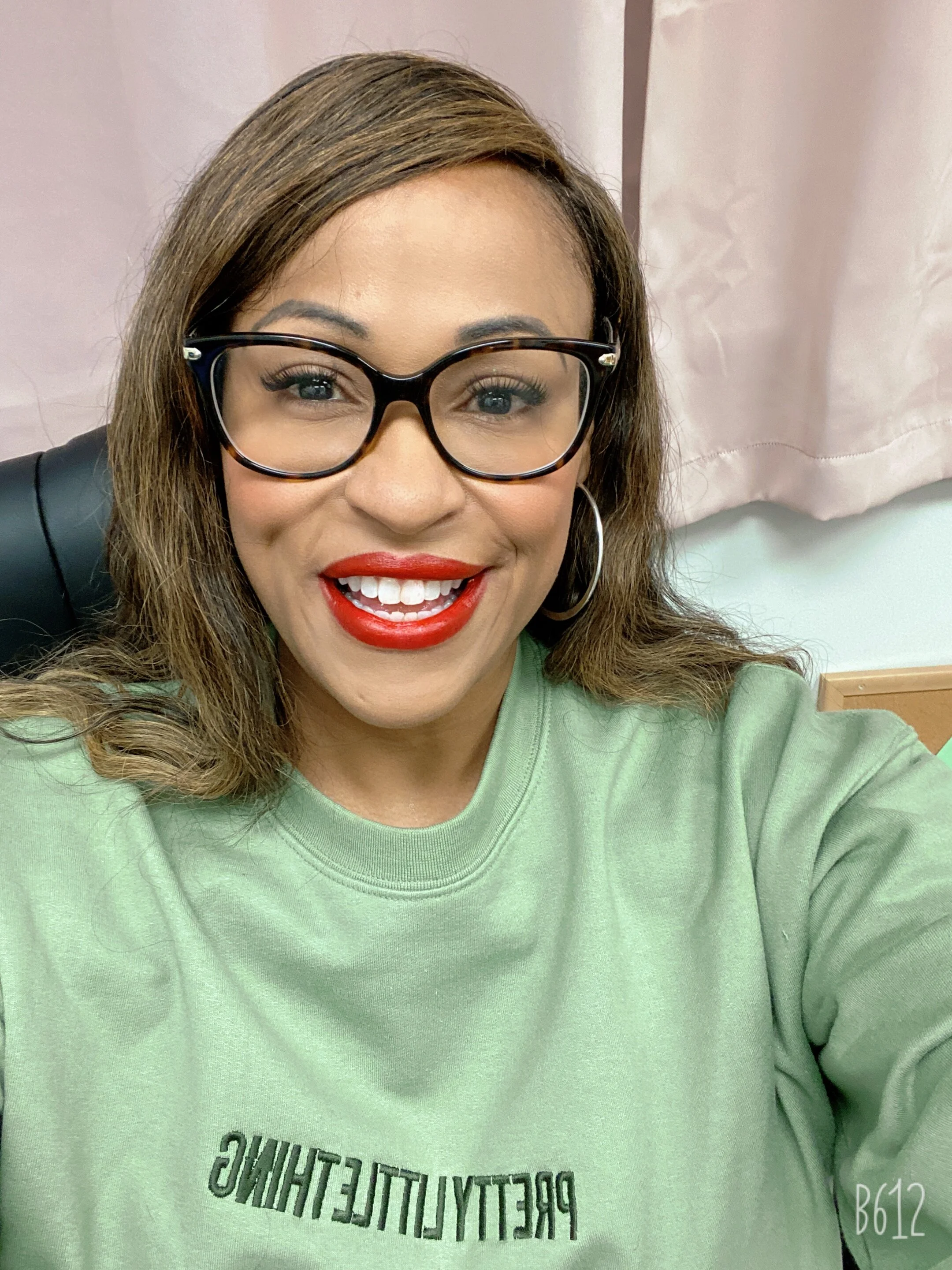
Leading with Love for Legacy
I just got done with Beachbody’s 21 Day Fix program. When the pandemic hit, I started a shared accountability group on Zoom that has gone through two rounds so far. We decided, if we were going to have all of this time locked inside, we would take advantage of the opportunity to get in shape. When else will we be able to work out without having to do the juggling act of parenting, leadership, etc. to get our workouts in? This experience has been a silver lining in this global plot twist we were all presented with, and unbeknownst to my family there was still more storms ahead…
Breanna, Virtuous, Noble, and Strong
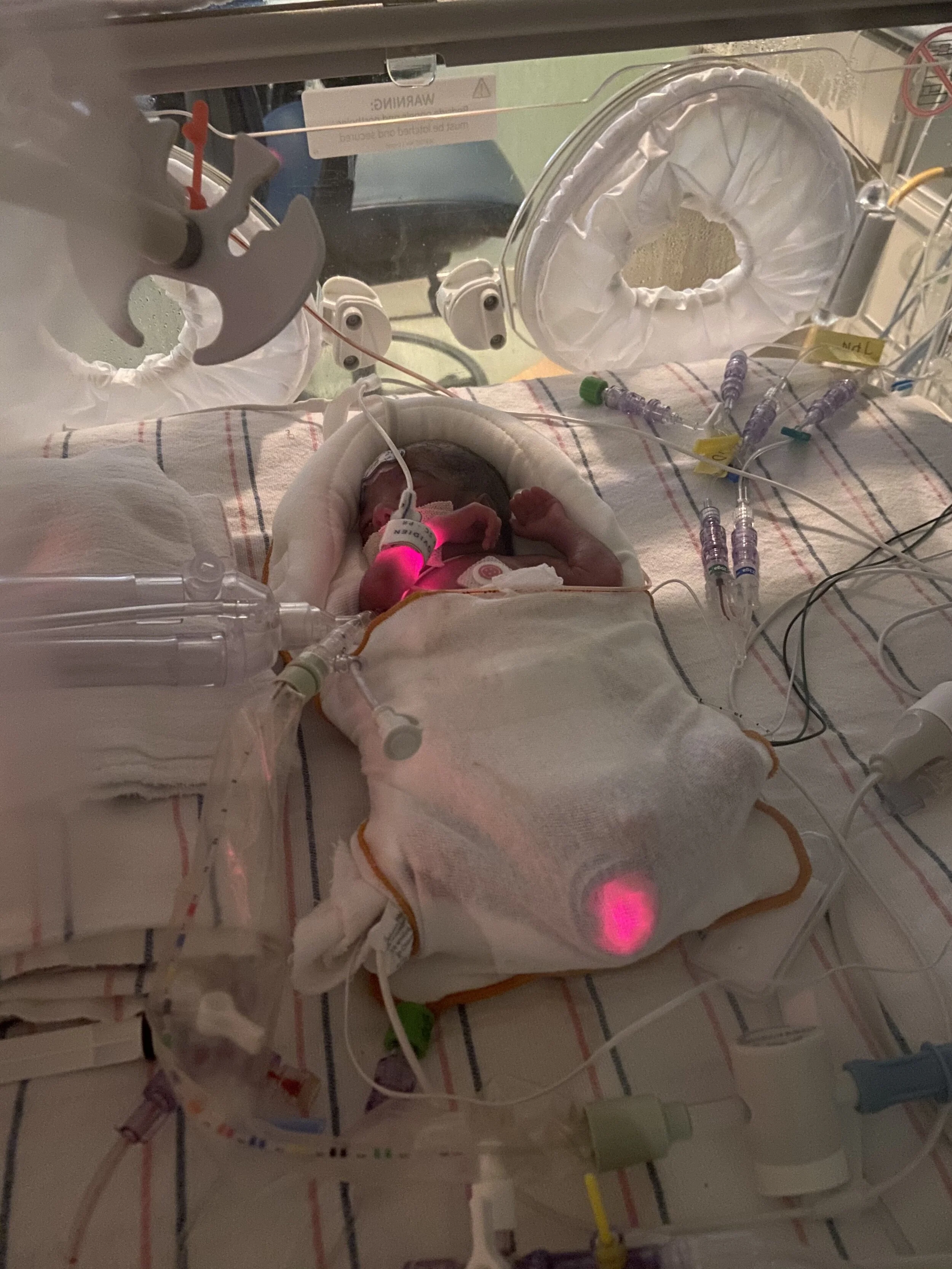
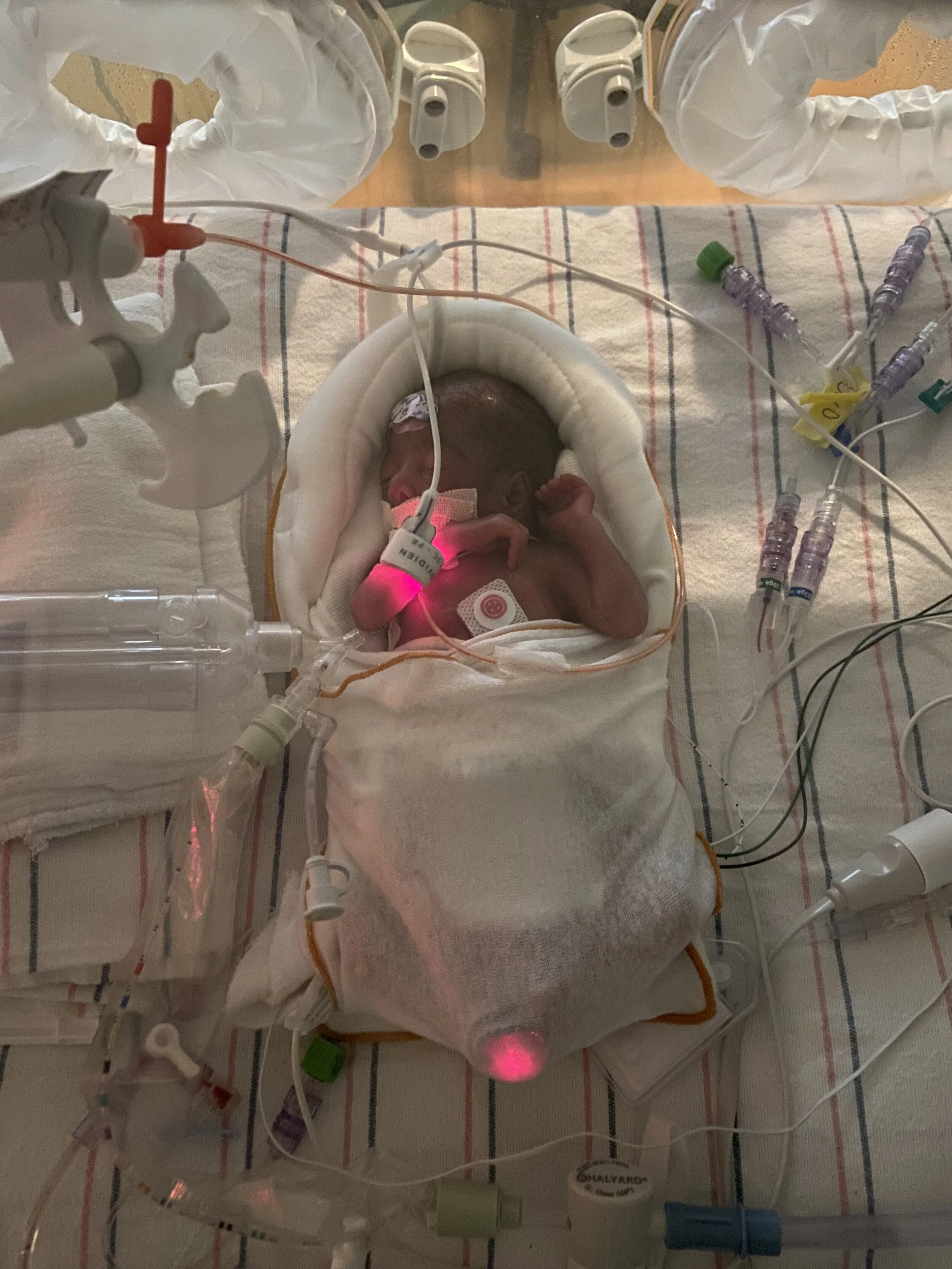
My oldest daughter lives in Florida with her husband and two children, and we were all expecting their third child in August. However, life happened, and our little Breanna was born a micro-preemie.. Needless to say, this has presented us with a serious challenge amidst an already complicated season. You may be thinking, “What is a micro-preemie?” I know I was. It turns out, “A micro-preemie is a baby who is born weighing less than 1 pound, 12 ounces (800 grams) or before 26 weeks gestation. Since these types of babies are born months before their due dates, micro-preemies face long stays in the neonatal intensive care unit (NICU).”
As soon as this matter ensued, I started researching names. I believed we should call her something that would equate to her winning this fight for her life in the coming months. I only told a few people what was going on, because we were very scared at first. All preemies don’t survive. Sadly, once I realized that there was nothing we would be able to do to stop this, one of the first things I did was google survival rates. We decided on Breanna because it means virtuous, noble, and strong, and because it is the name her husband and her grandmother could agree on (lol).
Values-Based Leadership
Harry Kraemer’s book “From values to action: the four principles of values based leadership” was one of our first assignments a Baumhart Scholars, and we were fortunate to have Mr. Kraemer visit with us as a guest lecturer following our reading. He was just as authentic, vulnerable, and amazing as his writing in person.
As I tell my students, becoming the best kind of leader isn't about emulating a role model or a historic figure. Rather, your leadership must be rooted in who you are and what matters most to you. When you truly know yourself and what you stand for, it is much easier to know what to do in any situation. It always comes down to doing the right thing and doing the best you can. That may sound simple, but it's hardly simplistic. Doing the right thing is a lifelong challenge for all of us. -Forbes, The Only True Leadership is Values-Based Leadership
I had no way of knowing how important this wisdom would become in my life, both personally and professionally, this year. Reading this book would deepen my resolve to align and live my values personally and professionally for the rest of my life. I aspire to lead authentically in word and deed, and living in a space where I am honest and free to be myself at all times. By doing so, I hope to continue meeting people where they are, inviting them to bring all of themselves to our interactions/experiences and then locking arms with them on their journey to being better and more. This authentic engagement will allow us to make lasting progress instead of showing up in a manner where you believe you have to present a version of yourself that makes you appear “politically correct” and therefore completely negates the opportunity for meaningful and lasting change/growth.
I have witnessed leaders who attempt to force people into boxes that make them comfortable, flying in the face of being brave enough to invite all types of people to the table which ultimately serves and benefits us all. They delude themselves, blind to the reality of their behavior. Being grounded in your values as a leader and as a person are not different or separate. We shouldn’t be artificial and divisive in our career and then selling a faux benevolence to others. Still even as I type those words I acknowledge my own naiveté. I understand there are leaders in our world who have the privilege of being/doing just that. This year, I’ve been presented with defining moments where I have needed to make critical decisions. When I got still and reminded myself of who I am and what I believe, the way forward was immediately crystal clear. No matter who we say we are and what we tell people we believe, the truth lies in what we actually do when our values are put to the test.
Another Test
‘Family First’ is one of my values. This is something I say and practice with my children, friends, team members, and employees. I seek to set an example that reinforces my support for them being great at work and equally great at family. I have been blessed to have leaders, professors, colleagues and people in my life who have always supported me when my family’s needs intersected with whatever my priorities were at any given time. So, what was I to do when my child was miles away amidst this COVID-19 lockdown? First, we supported her as best we could during the delivery (via face time). After that was over, we let her know we would see her soon. It was a no-brainer. Pandemic be damned, we loaded the truck and got on the road—family first.
Our Legacy
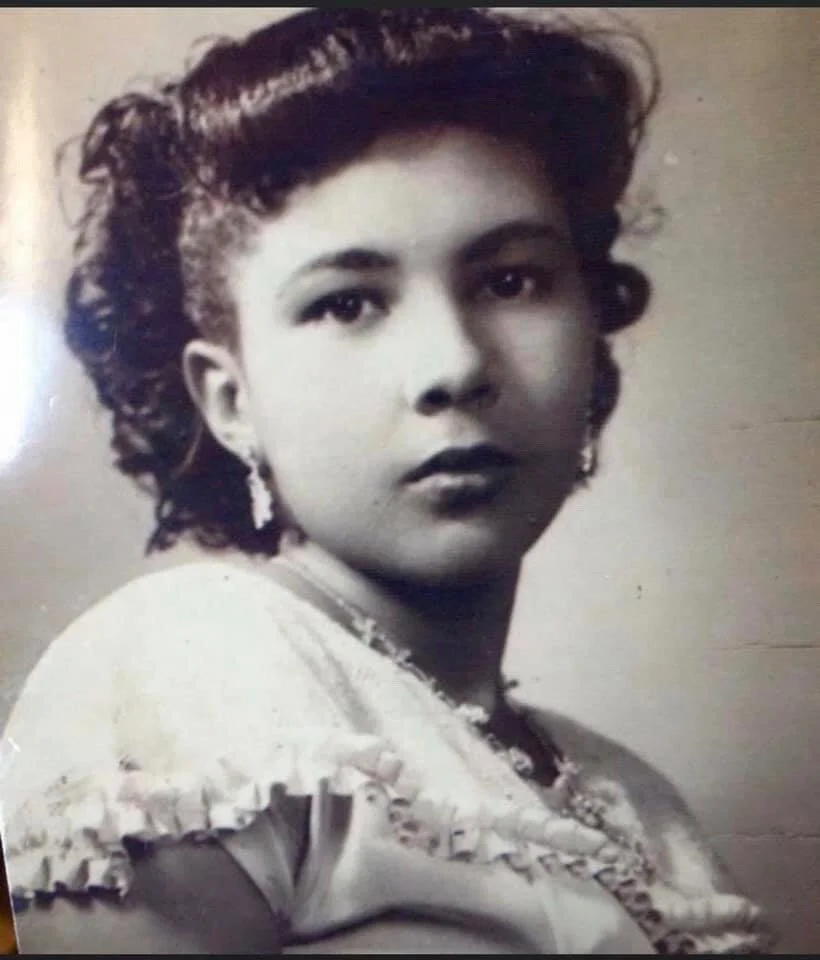
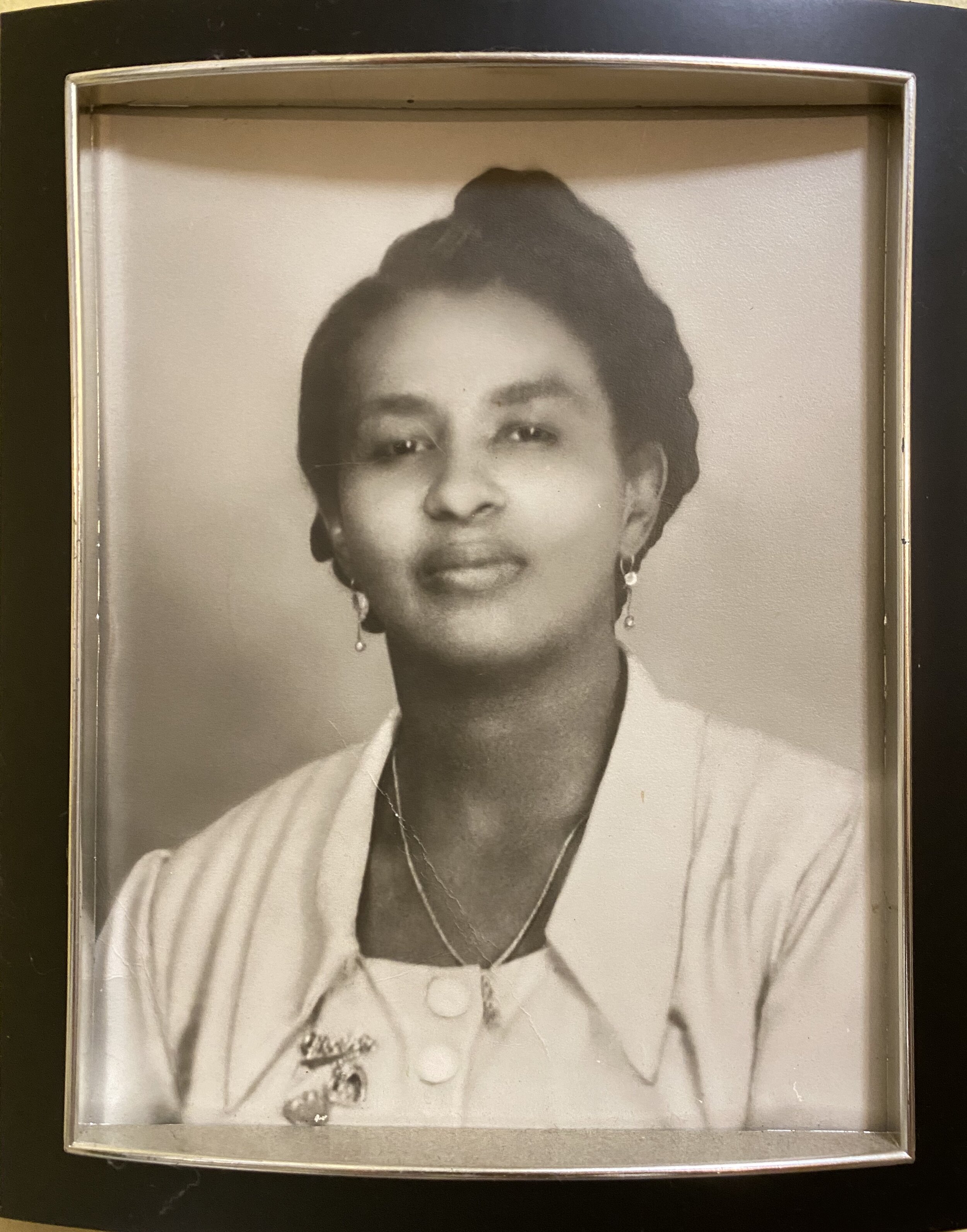
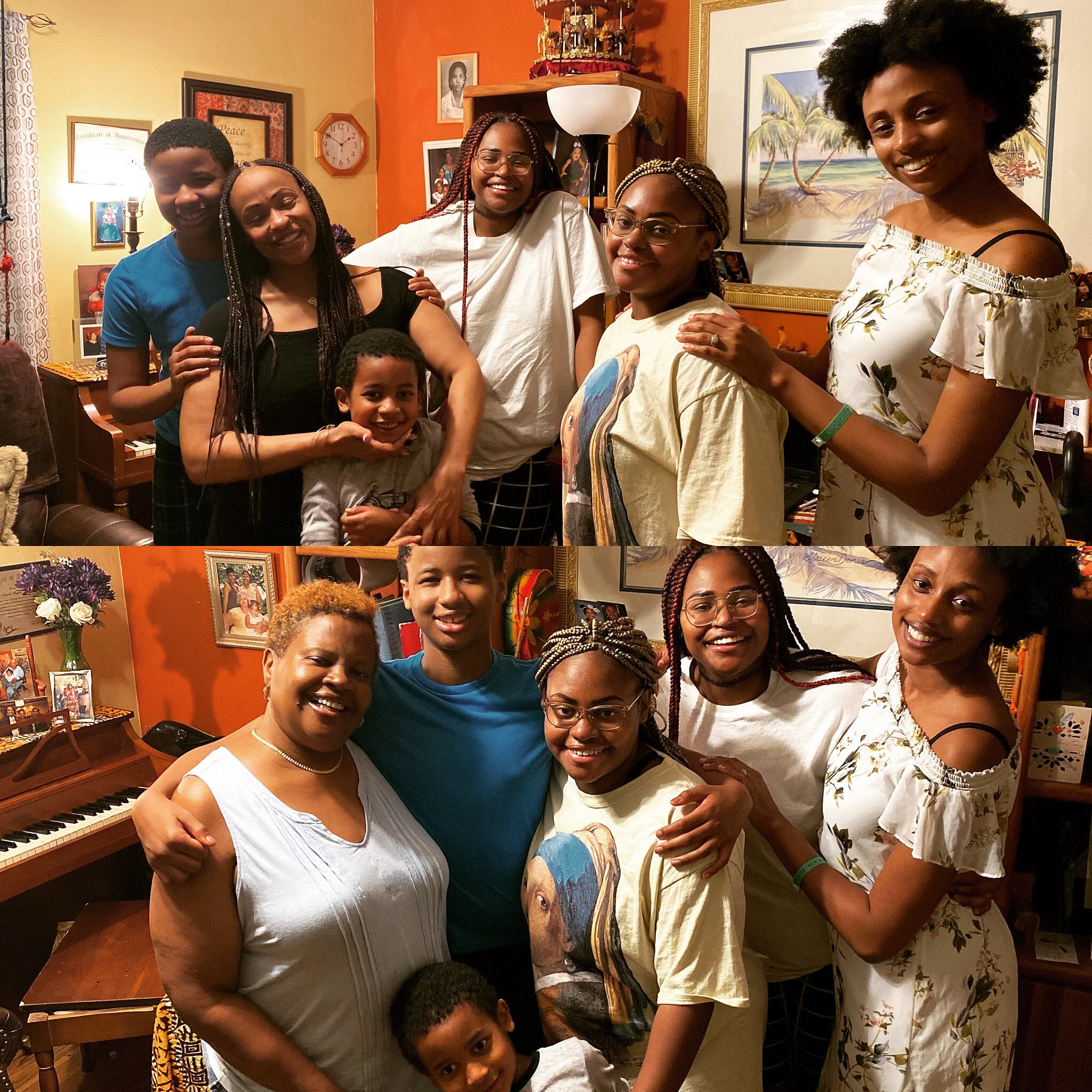
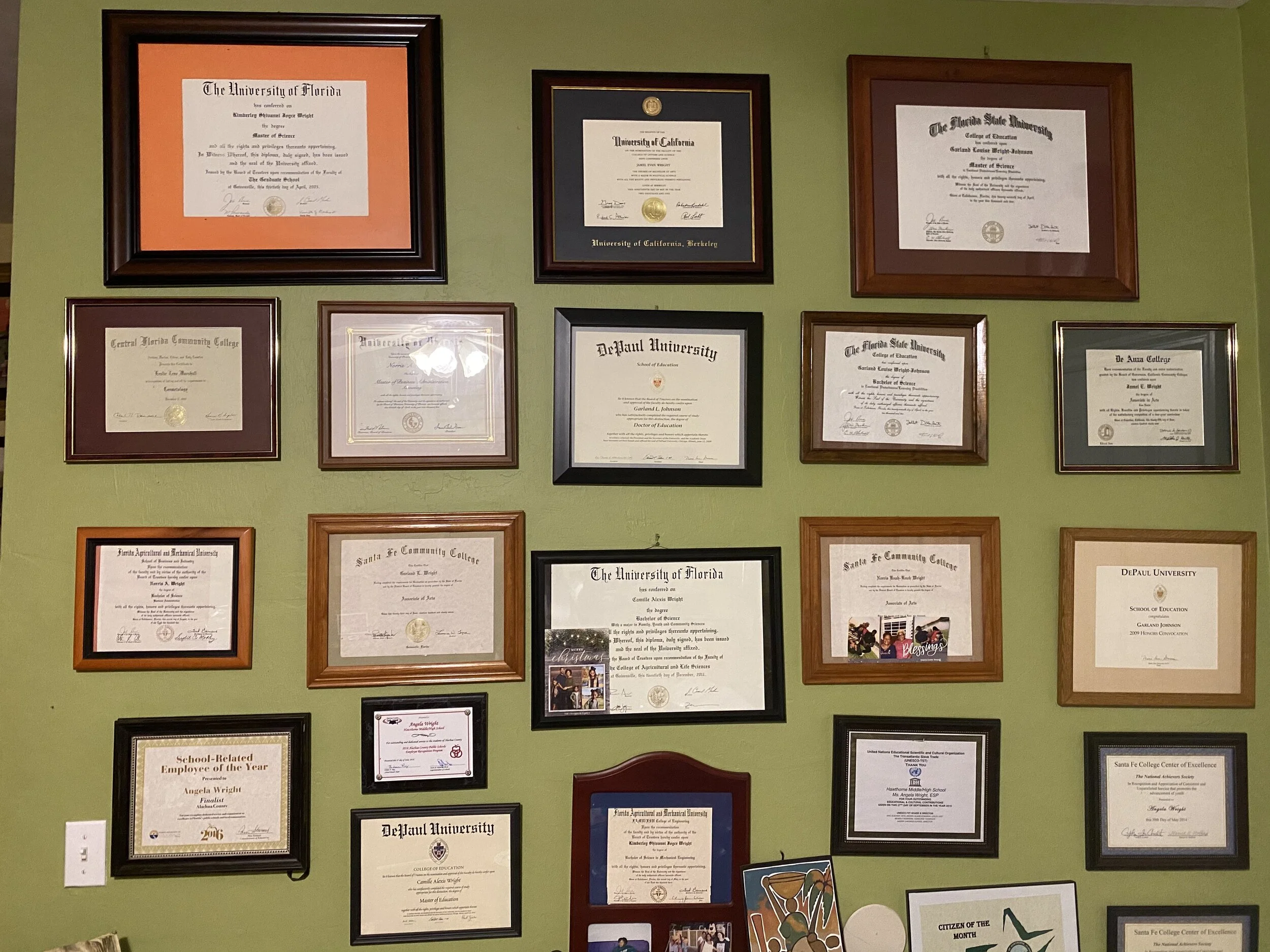
So I finished the 21 Day Fix in my mom’s living room in Florida, and as I sat gasping for air (because Autumn Calabrese went hard in the paint for our last work out), I started to take in the photos and the degrees on my mom’s living room wall. My mom is goals. She has wall full of her children’s degrees (and will quickly let you know five are missing) having never graduated from college herself. I hope to be as amazing and influential in who my children become. And then my eyes landed on my grandmother and great grandmother. I sat appreciating that I come from women who are strong, determined, generous, and beautiful (inside and out). That’s what I know about them from the stories that are told and the experiences I have had with how they showed up in the world. I started to think about what memories my picture will conjure up for my children and grand children in the future.
When I arrived in Florida and connected with my daughter for the first time, I saw weariness in her eyes. I could see the sadness she was trying to hide through fake smiles and a happy voice. She is tired, and she is hurting. Like so many moms who experience premature childbirth, she has been discharged and forced to leave Breanna behind for at least three months. Her heart is divided, trying to remain present for her baby and for her family, delivering the milk she has pumped for Breanna, and being present for her little ones at home. Because of COVID 19, no one else is permitted to visit the baby. We get daily pictures on an app to update us on how she is doing. It’s heavy, but another value I hold dear is ambitious courage. I coined that phrase because it’s not only having courage to manage the ebbing and flowing of challenges leaders encounter but it’s also going for it. Making the good things we desire happen. No matter what crisis or tragedy (or global pandemic) shows up, I have a standing response. “I’m the woman for the job”, and I need to make my daughter know that she is too.
Choosing to be here this week has provided an opportunity for me to live out my values and nurture the same in my daughter. I’m here to show and remind her of the strength and beauty she carries within. Along with taking some of the weight off of her shoulders, I’m here to assist her with setting up systems of support to get through this. Supporting her during this season is intentionally shaping our legacy—one of beauty, strength, and an unexplainable gift for loving, supporting and bringing out the best in others, come what may.
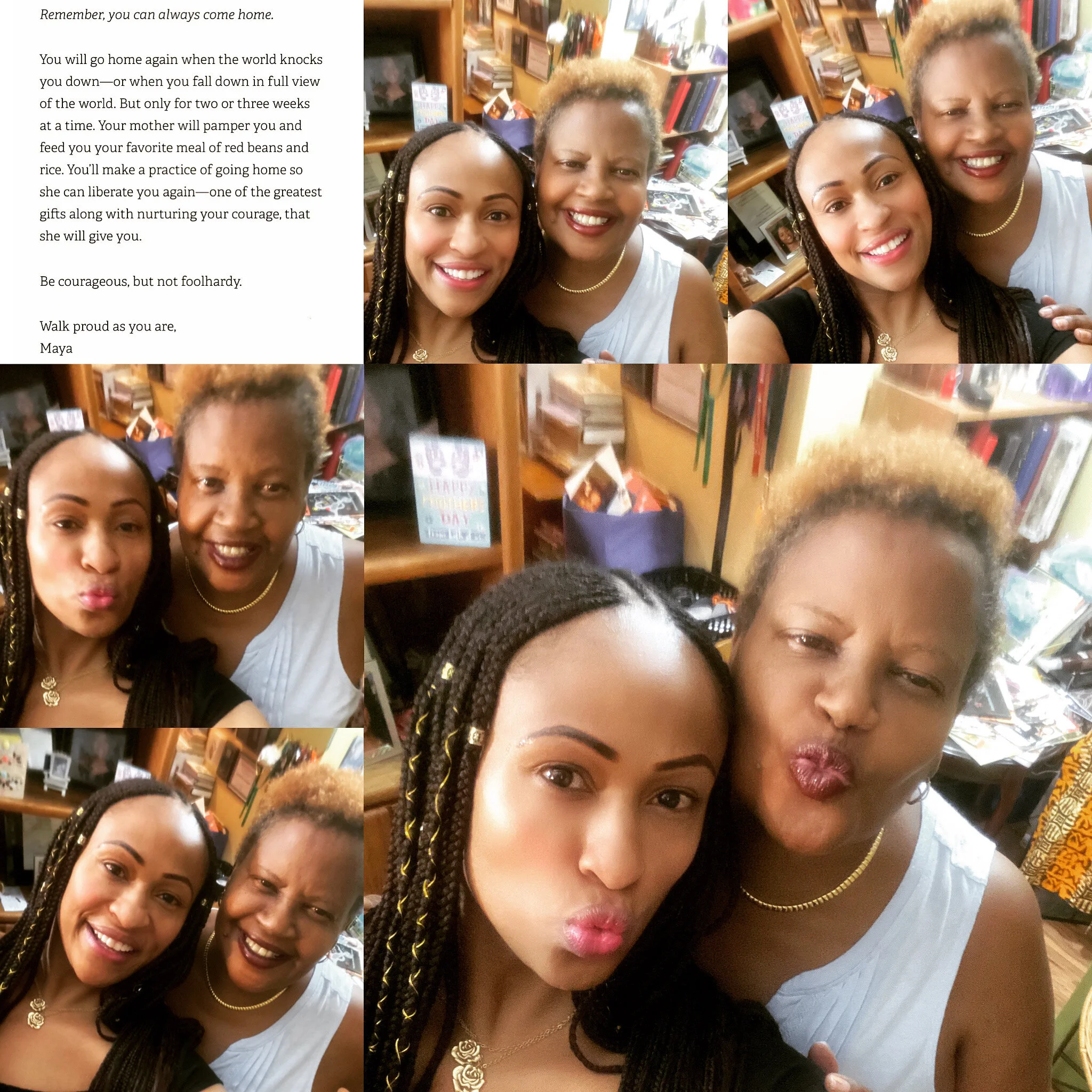
Legacies grow generationally. Yet again, I am reminded of Maya Angelou’s poem “Our Grandmothers” . I am the legacy of women who have historically overcome tremendous odds and challenges with a strength and grace that passes all understanding. Women who love and care for others and get the job done, come hell or high water.. I am the legacy of my mother and my grandmothers. By showing up, I’m able to be/show the love, the strength, and the care that I want to be remembered for and to carry them forward as courageous women who continue our legacy and create their own.
Keeping it real, true, and free,
Garland Darling
Our Finest Hour
Like many of you, my home and work lives are now completely conflated. This pause imposed by COVID-19 has proven one can indeed run a company, a multi-level grade school, cook, clean, and work out in the same space and on a non-stop basis. Certainly, there have been moments of near insanity, but I also find myself becoming more grounded in my faith and my health. As a leader, these are the times when our resolve becomes most critical. In my case, my team and my family are taking their cues from me, so It is important that I do what is necessary to give them what they need to survive and thrive.
Holding Up Your Arms
You might be thinking, “I’m in the middle of a GLOBAL pandemic! I am barely keeping it together myself.” Believe me, I get it. Yet, your charge or burden as a leader, doesn’t change with challenge. In fact, I believe getting through the tough times is what makes us and our teams better. In the bible, Moses demonstrated the importance of a leader’s countenance in relationship to the victory of his team. For Joshua, Moses holding up his arms empowered him to believe in his ability and see the victory through.
11 As long as Moses held up his arms, the Israelites won, but when he put his arms down, the Amalekites started winning. 12 When Moses' arms grew tired, Aaron and Hur brought a stone for him to sit on, while they stood beside him and held up his arms, holding them steady until the sun went down. 13 In this way Joshua totally defeated the Amalekites. 14 Then the Lord said to Moses, “Write an account of this victory, so that it will be remembered.
-Exodus 17 GNT
Yet for Moses, Aaron’s role was most critical. Leaders are human, we can grow weary in spiritual and physical strength; however, if we can acknowledge this appropriately and accept support, we can still win. The key is to remain committed to the battle and to leverage the collective strength of your team. Whether your team is at home or working remotely, your job as the leader is to develop a resolve that expresses we are in this and will get through this together.
We have been home for about three weeks now, and one of my first objectives was revisiting our strategic focus to navigate this critical period. None of us saw this coming, but it’s here. “What is most important right now?” seemed to change in the blink of an eye. As tragic and unfortunate as these circumstances are, taking my team through the exercise of deciding what we would be focused on to both survive and thrive through this period created an opportunity to engage and invest them in our collective strength all over again.
A New Mission
Flight’s leadership in Apollo 13 is my favorite example of leading through challenging times and circumstances. “Flight”, Ed Harris, brings the team together to ground them in a new mission. This is leadership at its finest, and since it is based on a true story, it strengthens my resolve all the more. Granted, I am not dealing with anything as delicate or complicated, but that just makes his example all the more powerful.
As the leader, Flight makes three things clear:
We have to give up what we had in mind, “Okay people, listen up! I want you all to forget the flight plan…”. I can only imagine the heartbreak and disappointment they all felt around the failure of the mission. There were endless hours of preparation, training, sacrifices, and resources devoted and tied to the success of this mission. That said, it was important for him to name that it was now over to prepare his team to shift.
We have a new focus, “From this moment on we are improvising a new mission.” He is clear and direct and in response, his team gets on board immediately. I love that he doesn’t tell them how, instead he asks them, “How do we get our people home?” It told them hey we are about to go up against what could be considered an impossible thing, but I believe the people on my team are capable of overcoming and getting it done. He is expressing his resolve and his faith in a positive outcome.
We are going to accomplish this together. Right away his team engages. They offer solutions and they challenge and push one another, and the leader facilitates healthy problem-solving. He does it in a way that respects their input and leverages it to provide clear direction and focus on the path forward.
Your Finest Hour
This scene is near the end of the movie. The astronauts and the team back at home have worked through a number of incredible obstacles. As they prepare to finalize their new mission and bring them back into the earth’s atmosphere, someone is there to remind them of the limitations and the things that could go wrong. Are they real? They always are. Do they shake the leader? They can’t.
As they listed all of the things that could make this the worst disaster NASA had ever seen, Flight responds confidently, “With all due respect sir, I believe this will be our finest hour.”
As leaders, we have a choice, and I often remind those I coach and mentor, “You can’t be pitiful and powerful at the same time.” It’s that simple. Think about it, if you were those astronauts, what would you want from the person taking command on the ground? If you were a patient with a surgeon operating on your body, which mindset would you want the doctors to have? What kind of leadership do you want from the person flying your plane? I don’t know about you, but I want Flight. I want the leader who has his face set like flint to bring me home. It’s time to boss up like never before.
Is it hard? Hell yeah. Is it scary? For sure. Do you have faith? Then stand in it. You can’t serve two masters. Let these moments teach you and bring out the best in your leadership and in the synergy of your team. Whatever your plight. Determine in your heart that “Failure is not an option”, and then think and operate from a position of power.
According to your faith, be it unto you.
-Matthew 9:29
Keeping it real, true, and free,
Garland Darling
Better Citizenship
It is the first day of 2020. My vision board is up, and I am beyond excited for the opportunity to begin anew. I hope this is a shared sentiment. My subject for this blog is driven by my recent read of Malcolm Gladwell’s new book Talking to Strangers and listening to Steven Petrow’s Ted Talk, 3 Ways to Practice Civility.
What We Should Know About The People We Don’t Know
Gladwell’s book is amazing. It is a page turner that pulls you in right way. Once again he has managed to use some of the most engaging stories from history, past and present, to make us rethink what we believe we know. He sobers readers and challenges our false understandings around communication. And though this notion of ‘talking to strangers’ can seem so harmless, we know that breakdowns in communication often lie at the heart of misunderstandings. Misjudging the behaviors and intentions of others has repeatedly hurt the individuals involved and hurt us as a society when we are forced to be witnesses and take sides. It is nearly impossible to remain neutral around the level of controversy the events shared within his book have levied on society the world over.
Gladwell demonstrates how delicate and important our initial conversations have the potential to be. It is the birthplace of misinterpretation and the subsequent tragedies that follow. Tragedies like those in death of Sandra Bland, the renowned Brock Turner rape case at Stanford University, the Jerry Sandusky scandal, the wrongful conviction of Amanda Knox, and the list goes on and on. Sadly, all roads lead back to misfirings in communication or the lack thereof. Case after case, the author skillfully unpacks our vulnerability, from our inaccurate beliefs/practices around interpreting honesty in the eye gazes and facial expressions of others to understanding how our instincts can betray us when they are not properly validated/investigated.
Gladwell completely disrupts any idea that human-beings are capable of being packaged and understood as a brand rather than individuals. While we may in fact share behaviors and responses unique to our respective cultures and communities, we each have our own idiosyncrasies that make us unique. Talking to Strangers teaches us that we have much to learn about authentic communication.
Gladwell summarizes this best,
This is a book about a conundrum. We have no choice but to talk to strangers, especially in our modern, borderless world. We aren’t living in villages anymore. Police have to stop people they do not know. Intelligence officers have to deal with deception and uncertainty. Young people want to go to parties explicitly to meet strangers: that’s part of the thrill of romantic discovery. Yet at this most necessary task we are inept. We think we can transform the stranger, without cost or sacrifice, into the familiar and the known, and we can’t (342).
The intellectual indulgence is more than worthwhile. The stories and lessons will make us better at understanding one another. I believe the implications have even greater relevance for those of us who serve in capacities that fly under the radar yet are constantly making decisions that impact the experiences and opportunities of others. After the read, I found myself committing to making an earnest effort to ask, watch, listen and learn more and avoiding the urge to size people up by filtering through lenses that may well be antiquated and irrelevant depending on who and what is involved. His work encourages us not to assume intent, be it positive or negative, but rather to give people the benefit of communication—owning and checking the biases and defaults we bring to the conversation as well.
Civility
And then I listened to Steven Petrow’s Ted Talk 3 Ways to Practice Civility. In this talk, Steven discusses his belief that civility has become a dirty or obsolete word, replaced by “decorum” or being “politically correct”. What’s the difference? In my mind, it is having an agenda vs. appearing before an audience. Civility’s agenda is to dialogue in a manner that respects the other, after which we may walk away disagreeing but not in any hateful or belligerent manner. Moreover we understand that we belong to a society bigger than ourselves, share an identity and at our best aim to treat the other in the manner we wish to be treated. To me, decorum is about an audience. Saying and doing the “correct” thing to avoid judgement or appearing as though one lacks manners/class.
We live in the information age, and we can see discourse at its worst on a daily basis. Social media comment battles seem to go so bad so quickly…or tweets from the bully pulpit where anyone who dares to disagree can and likely will be attacked. At times, it seems we have lost touch with the right we all have to think and believe for ourselves. I would argue that we should not become angry and hostile toward someone for not sharing our beliefs—even when they are in defense of a group you believe has been marginalized or oppressed in some way. By doing so, you are taking the disposition of the oppressor. This is the climate of discourse in our country though. We are not seeking to engage with an agenda civility in mind or as a rule.
In his talk, Petrow suggests 3 easy ways we can practice engaging in a more civil manner:
1. Avoid trigger words or labels that raise defenses and incite negative reactions (i.e. racist, sexist, homophobe, etc.). Instead we can focus on the matter at hand and talk about the behavior or issues to gain understanding and respect for the opposite side.
2. Avoid personal attacks. He sited John McCain as an example of someone who disagreed with many but was respected by all for the manner in which he chose to disagree and focus on the issues rather than having a reputation for launching abusive remarks and hitting below the belt when discussing sensitive topics.
3. Explore/embrace/invite/indulge the joy and kindness of human connection. Even when we disagree with someone, we have an opportunity to develop a relationship. It doesn’t have to be deep but we can gain more from setting our differences aside and seeking to go a little deeper as humans sharing earth.
It is worth a listen. The talk certainly gave me a frame for thinking about the ways in which I show up. Everyone has an opinion about everything, and disagreements become inflammatory and aggressive relatively quickly. When you think about heroes like MLK, Jr. they are models for this type of civility.
Making The Connection
As I listened to Petrow’s words, I considered them in relationship to Gladwell’s book. I saw an instant connection around our need to do a better job of engaging with one another as rational individuals. It’s an opportunity for better citizenship and better relationships. And if we can be better to one another, why not give it a shot? We can be kind(er), and we don’t have to continuously seek to box people in to get our point across. In most cases, we will never win the argument so why not at least gain respect for where we each stand. I share from a place of humility and appreciate the opportunity to be intentional about showing up authentically.
I’m simply sharing what I consider a hip check from God on keeping our reactions to the behavior and thoughts of others in perspective—even when they are opposite my/your own.
Happy New Year!
Keeping it real true and free,
Garland Darling
Embrace the Climb
One of our most challenging students met me coming in the door at work today, taking my bag from my shoulder to lighten my load, he followed me into my office. As he sat, I discovered his plan to exit and go back home. This student is facing the pull between our school and the streets, so I decided to pull with him. I shut my door and we reset. I loved on him (mediation, clean uniform, school supplies) and eventually hand-delivered him up to class. Before that, I listened to him groan about not wanting to be in school. He expressed his feelings that he is a bad person who no one even wants at school. He explained that he believed in God, but they “just are not cool right now “because of his mistakes, “Prayers go up, Big Dawg (his name for me), but they don’t get answered.”
Whether a child contributed to their predicament or not, does not change or dictate my response. It hurt me to hear him open up about his hopelessness, disappointment in his choices, and the realities to be overcome in order for him to be successful. Our time together connected with something I am feeling very deeply as a mother and as a professional in this season. So, once again I must respond to this urging to excavate the unsaid in order to inform, remind, and/or encourage those professionals on a similar battlefield. Urban education is indeed challenging. When you do it in Chicago, depending on where you serve, that challenge can be multiplied.
Whether it is the seemingly unreal expectations to do more and more with less and less in every aspect of your work or in the level/amount of intervention it takes to keep the ship afloat, it can be absolutely daunting. I will never take that away from the educators who do this very challenging work in the most difficult of contexts. I see you and I understand. I will say and say again that no amount of teacher education or professional development will prepare you for the days that can knock you off your feet from what you can encounter in a day’s work. You are never ready and there is no script for some of the roles I have had to play since stepping into the arena that is Chicago Public Schools. It takes love. It takes courage. It takes strength.
There is no manual for how to capture the hearts and minds of the children and the adults working under your steed while being knocked down walking in the door—daily. This is a ministry one has to accept and embrace because it is worthy. I cannot speak for others, but when people ask me how I do what I do and why I do it where I choose to do it, I have a simple answer. It is in Him that I move, breathe and have my being. I go in His strength. I operate from the capacity that is available through a covenant with God. But for his grace, I would have lost my mind long ago. I must look unto the author and the finisher of my faith, trusting that where he takes me will have purpose (whether I understand it or not) and provision (whether I see it or not).
In addition, I have been known to say, “I am these kids.” I come from the same place and I know how dire the need for this education is for their empowerment as transformational leaders. I know what brokenness and hopelessness feels like. So, this week, I was tried and tested as a mother when my five-year-old son, Elijah, started Kindergarten. Depending on the setting, his natural intelligence, charm, and wit, can be overshadowed by his special needs. On his first day of school, I was contacted by a school leader within an hour of his arrival with questions about things I know were contextually and developmentally appropriate for a child just starting school in a new community. The sadness and anger that ensued within me is indescribable, and I won’t belabor it because Elijah has been blessed with parents who are equipped with the knowledge, resources and relationships to fight for him. Elijah is going to be okay because God has positioned me as his mother. Within days, a new narrative is unfolding, and he is thriving.
But I was reminded that I am not positioned only for Elijah. I am positioned for the many children who don’t have a mom who is an educational leader. I am positioned for the women who are where I used to be--teen moms, the single moms, the sometimes not-so-educated and equipped moms. I am their champion, and I am an advocate for their sons and daughters.
Since I came into the field of education, my job description has been and will stay, “Whatever it takes.” In my meetings with district and school level leaders, there were messages that I needed to send about educating my son, and I realized when I walked in the door at one of my high schools today that those messages are not unique to the adults at Elijah’s school. So, to my allies in the field who I believe start and stay in this work for the right reasons, take heed to these messages if necessary. They are from the heart of a mother who is in the fight with you.
Be sensitive to the special needs and circumstances of the children you serve. Special needs show up in a lot of different forms. Mitigating these needs and circumstances should be why you chose to show up wherever you show up. Resolve to love the children in the communities where you do your work--on sight. Let that love be your guide, inform your mindset and frame your communication.
Be careful not to get settled in judging your babies, whether they are in Kindergarten or in 12th grade. I pray that you see yourself as a source of hope and a path to inspiration that their hearts need so badly. The world is judging them. The world is making excuses for people taking their innocent lives. The world is turning their back on them. Careful not to harden your heart, forget your purpose, and do the same subconsciously.
Believe in their potential. As the African proverb “Amachi” intends “the child is a gift from God” or “Who knows what God has brought us in these children”. They need you to see the potential that exists within each of them, no matter how challenging their individual plights. They are worthy of love and belonging. Even if you stumble trying, contend and push back against the urge to write them off. Even if your efforts don’t end up saving them from a cell or the grave, at least you know you tried.
I get it. I know your own humanity can run on empty. I know they didn’t tell you that having the wind knocked from your body can happen on a daily basis. At times, it seems no one sees the trauma you yourself undergo. It’s just a part of the job. Facilities are unfair and resources are unequally distributed. I opened a high school in Englewood and lead schools in North Lawndale. I know that the metrics that put you side by side with schools who can’t compare to what you show up for daily can feel like a backhanded smack across your face. Try to remember that what you feel is just a microcosm of the injustice your babies were born into. Whether it is the color of their skin, their ability/disability, their zip code, or whatever the lacking developmental asset some children, schools, and communities seem to be loaded down with. They need you more. Even when they don’t know it and can’t express it, their hearts are counting on you.
Embrace the climb, wholeheartedly—ANYWAY. Don’t lose heart. Ground yourself in your why. Our babies are worth it.
Keeping it real. true, and free,
Garland Darling
Chase the Yes'!
This piece is to launch my ‘Leadership Is A Super Power’ Blog on 4coloredwomen.com which I will use to share tidbits of insight around leadership.
Read more